
What is decking cleaning and restoration?
Decking cleaning and restoration removes dirt and surface growth, then prepares and renews an appropriate finish where the material allows it. On timber, the job may include brightening, selective sanding and oil or stain. Composite usually needs cleaning to its manufacturer’s instructions rather than a timber treatment. Neither process repairs a weak structure.
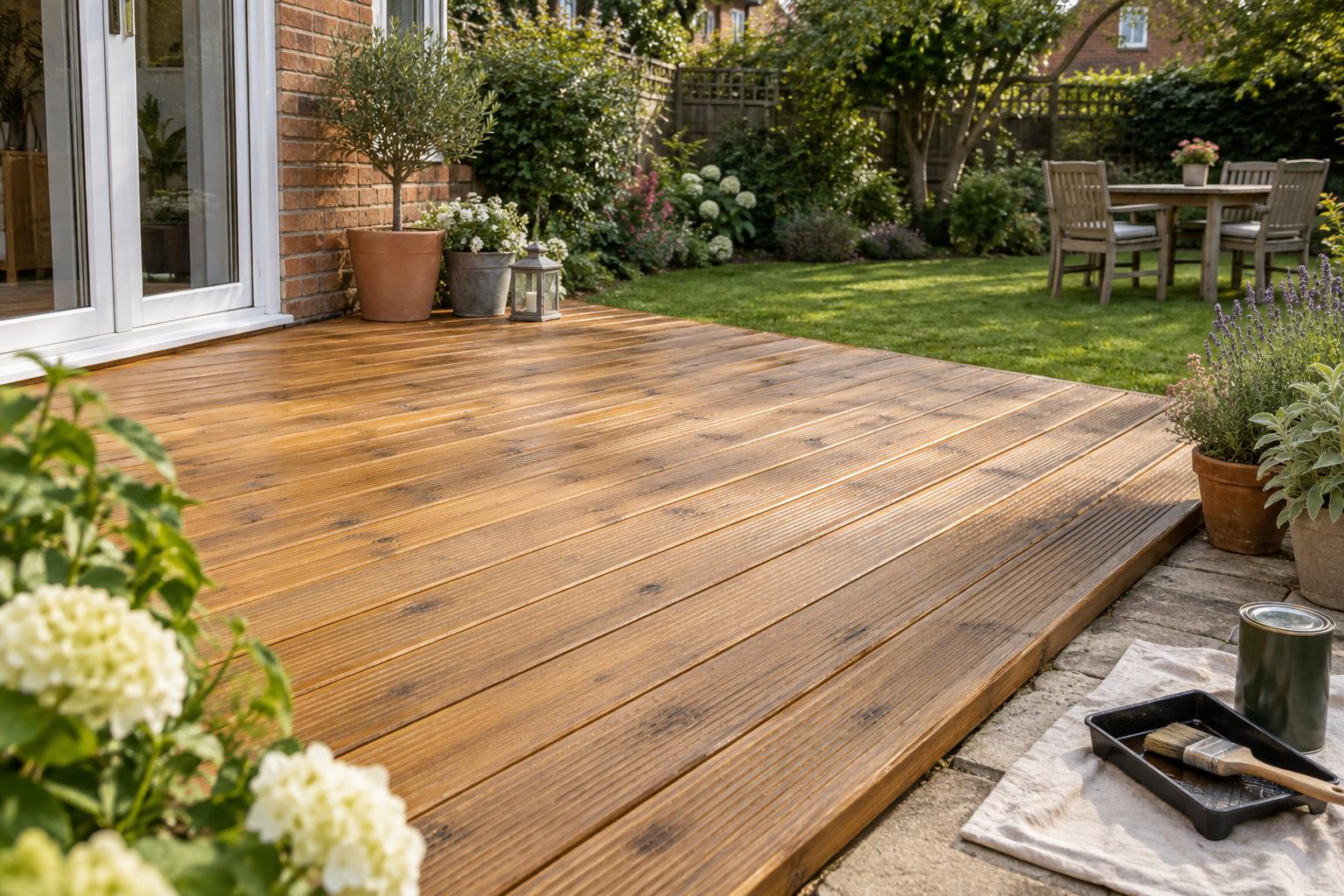
Signs you may need decking restoration
- Surface algae or dirt has made a sound deck unpleasant to use.
- Timber has weathered and you want to refresh its appearance.
- An oil or stain has worn unevenly or started to peel.
- Food marks, leaf staining or grime need a cleaning method suited to the board material.
Identify the surface before deciding the method
A flaking film finish cannot always be covered successfully with decking oil. The contractor may need to strip incompatible material, wash it away and allow the timber to dry before further preparation. Discuss a trial patch and the finish you want, including how much natural grain should remain visible.
Aggressive pressure washing can damage timber fibres, while unsuitable chemicals or abrasives can mark composite. Ask for a method appropriate to the actual board and coating. Planting, drains, ponds and nearby finishes need protection, and cleaning runoff must be managed responsibly. A clean colour does not prove a board or joist is sound.
What to discuss when the contractor visits
Identify the last oil or stain if you can, and say whether there is a tap and a practical route for equipment. Photograph peeling areas and tell the firm about nearby ponds or sensitive planting. Do not book a cosmetic treatment as the answer to springy boards or moving rails.
The work to include in the proposal
- Identify the board material, previous coating and visible defects.
- Agree a trial area and protect adjacent plants, paving and water features.
- Remove leaves and surface deposits using a compatible product and technique.
- Allow the required drying period before deciding on sanding or coating.
- Prepare suitable timber and apply the agreed oil or stain as directed.
- Tidy the work area and explain curing time and future cleaning.
How much to allow for decking restoration
The site’s indicative project range is £150–£650. It is a budgeting guide for the described work, not a fixed quote or a promise about prices at your address. Area, severity of contamination and preparation time set the price. Cleaning alone is different from stripping a thick coating, sanding and making return visits. The published range suits modest domestic jobs; large decks, extensive coating removal and separate repairs can take the cost above it.
Ask the business to state the scope, any VAT, material delivery and waste charges, and which uncertainties remain. Changes uncovered on site should be discussed before additional work is authorised.
Permissions and the limits of the job
Cleaning an existing surface is different from building a new platform. If the assessment uncovers structural damage, agree a separate repair scope before finishing; changes to height or layout need their own checks.
Timing and looking after the result
Allow roughly 1–2 days for the work described in this service guide. Scheduling, material supply, weather and any necessary drying or approval stages can extend the overall period.
Wait for the product’s stated drying or curing period before replacing furniture. Future cleaning should remove debris without damaging the coating. Reapplication intervals depend on weather exposure, use and the finish; there is no single annual schedule that suits every deck.
Questions worth asking
Can composite decking be sanded and oiled like timber?
Usually that is inappropriate, especially for capped boards. Ask for the manufacturer’s cleaning instructions and only use a restoration product or abrasive method if it is expressly approved for that surface.
Will cleaning make slippery decking permanently safe?
No treatment keeps a deck permanently free of slippery deposits. Regular removal of leaves and dirt, suitable drainage and appropriate maintenance remain necessary after the initial clean.
Why might oiling need a second visit?
The cleaned timber must reach the condition required by the finish before application. Weather and drying can separate washing from coating, so working time and elapsed time may differ.
Describe the job you want assessed
Use the free decking quote form to explain your decking restoration project. Depending on the available businesses and your postcode, Garden Decking UK may match the enquiry with up to four independent specialists. You do not have to accept a quotation.
Joining companies are asked for relevant insurance details and references. Check current evidence and comparable work before appointing anyone. The contractor you choose undertakes the work under your agreement with that business; Garden Decking UK provides the introduction and does not employ the installers.