
What is composite decking installation?
Composite decking installation combines manufactured wood-plastic boards with a frame and fixing system designed for that particular product. Choosing a colour is only the beginning: the layout has to accommodate board lengths, temperature movement and the way the perimeter will be finished. A carefully planned deck avoids narrow leftover strips and unsupported joins.
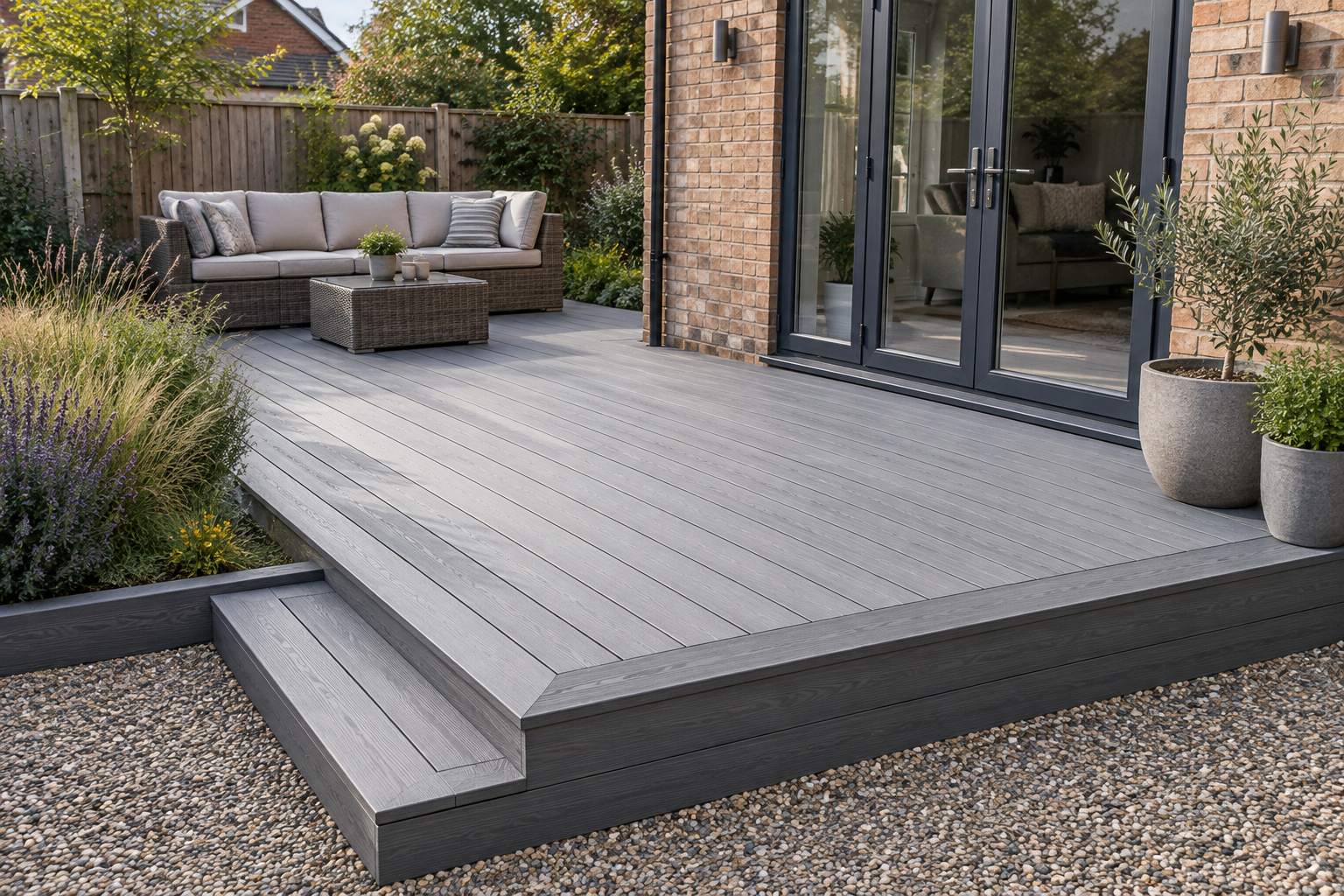
Signs you may need composite decking
- You want to stop renewing a timber stain and switch to a washable manufactured surface.
- You are planning a defined seating area with a consistent board colour.
- The design includes borders or steps that need matching trims.
- An old timber surface is being reconsidered, with its supporting frame still to be assessed.
Plan the board layout before buying the pack
A picture-frame perimeter can give a tidy edge, but its boards run across the main layout and need their own support. Butt joints may require paired joists or the support detail specified by the manufacturer. Ask how the installer will avoid small end pieces, finish hollow profiles and provide access to any inspection cover underneath.
Capped boards have a protective outer layer; uncapped products expose more of the wood-plastic core. Solid and hollow profiles also have different installation rules. Do not assume that a clip, end cap or spacing used for one range suits another. Compare the exact product literature and warranty conditions, including whether labour is covered if a board fails.
What to discuss when the contractor visits
Bring the dimensions of the intended furniture area and, if you have chosen one, the board range name. Tell the installer whether water collects after rain and which wall openings must remain usable. A door-level deck needs a designed threshold and drainage detail; a thin frame alone does not solve that junction.
The work to include in the proposal
- Measure the footprint and set out full board lengths, borders and access hatches.
- Assess support positions, ground stability and the junction with the house.
- Build the chosen frame with the spacing and joint support required for the board range.
- Use compatible clips or screws and the specified temperature-dependent clearances.
- Fit fascia and step trims without closing necessary ventilation routes.
- Collect offcuts and hand over the range-specific cleaning and warranty information.
How much to allow for composite decking
The site’s indicative project range is £2,800–£8,500. It is a budgeting guide for the described work, not a fixed quote or a promise about prices at your address. Board grade, usable board lengths and the frame material drive much of the price. Diagonal laying, perimeter borders and aluminium supports can add expense without increasing the seating area. Ask for the board product and any optional edge treatment to be priced explicitly.
Ask the business to state the scope, any VAT, material delivery and waste charges, and which uncertainties remain. Changes uncovered on site should be discussed before additional work is authorised.
Permissions and the limits of the job
Do not assume a deck is exempt just because it is made of wood or composite. Read the Planning Portal guidance for decking in England and check the rules for the actual address. Height, footprint, position and property restrictions all matter; UK nations have different regimes.
For decks requiring planning permission in England, Planning Portal building regulations advice says building regulations should be assumed to apply. Confirm the design and inspection requirements with building control, particularly for elevated structures.
Timing and looking after the result
Allow roughly 3–5 days for the work described in this service guide. Scheduling, material supply, weather and any necessary drying or approval stages can extend the overall period.
Sweep out leaves before they pack into the gaps and follow the board maker’s cleaning method. Composite is not immune to algae, food marks or scratches. Test unfamiliar cleaners as directed and do not sand or oil a capped surface unless its manufacturer expressly allows it.
Questions worth asking
Can clips from another composite brand be used?
Compatibility needs to be confirmed for the actual board. Clip geometry, screw type and permitted movement can differ, so the installer should use the specified fixing system or an alternative approved by the manufacturer.
Will a border need extra framing?
Usually the border and any board-end joints need deliberate support beneath them. The installer should show how those pieces will be fixed rather than relying on the edge trim to carry them.
Is composite a cure for a damp, shaded corner?
No. The surface may be easier to maintain than stained timber, but shade and trapped debris can still encourage slippery deposits. Drainage, airflow and cleaning remain part of the job.
Describe the job you want assessed
Use the free decking quote form to explain your composite decking project. Depending on the available businesses and your postcode, Garden Decking UK may match the enquiry with up to four independent specialists. You do not have to accept a quotation.
Joining companies are asked for relevant insurance details and references. Check current evidence and comparable work before appointing anyone. The contractor you choose undertakes the work under your agreement with that business; Garden Decking UK provides the introduction and does not employ the installers.