
What is decking replacement?
Decking replacement is the planned removal of an existing deck followed by rebuilding the parts that are no longer suitable. It may involve a new surface on a demonstrably sound frame, or complete removal of boards, joists and supports. The useful question is not simply what new boards cost, but which old components are still worth relying on.
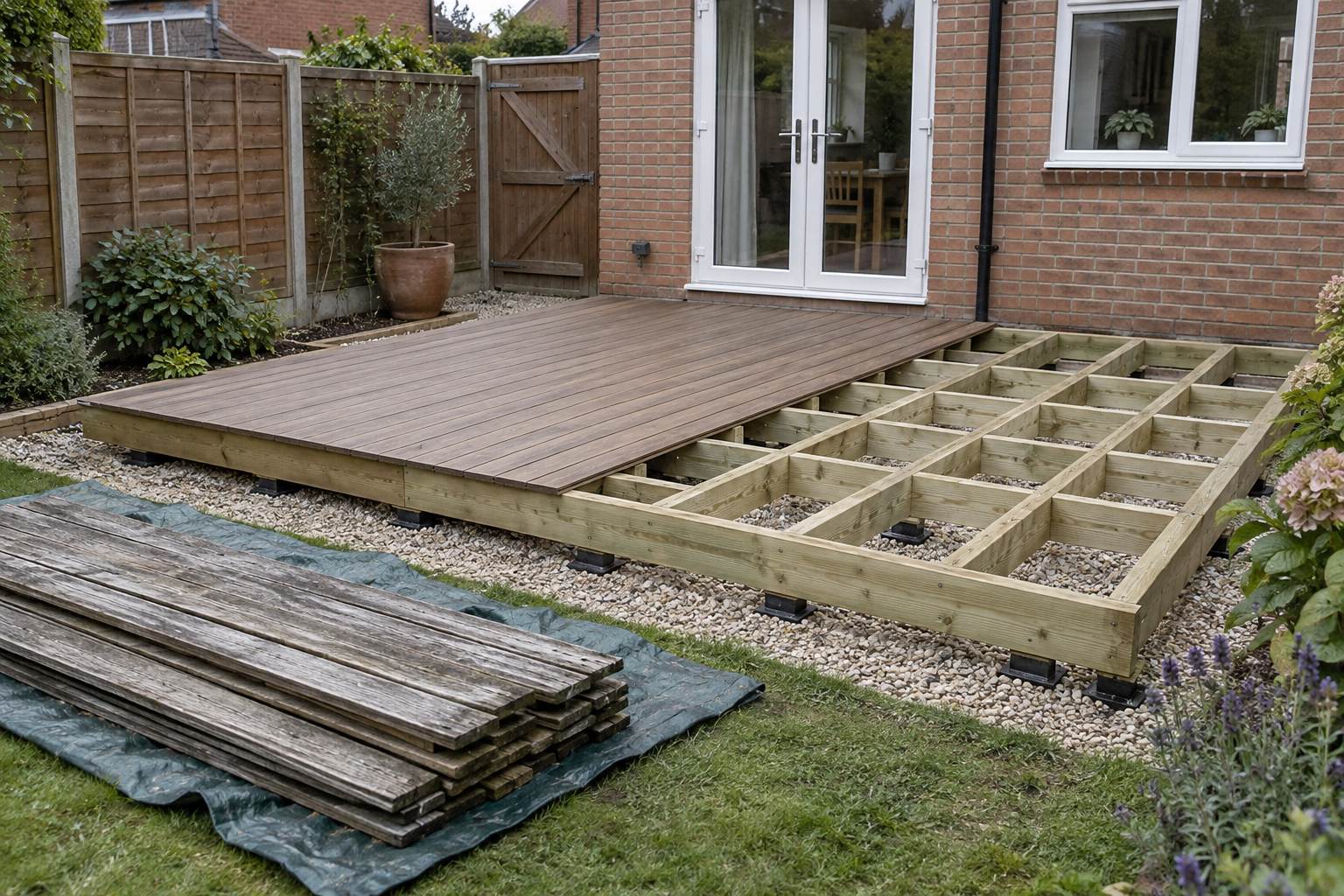
Signs you may need decking replacement
- Several areas sag or feel soft rather than one isolated board.
- The frame has deteriorated or the support positions no longer suit the design.
- You want to change from timber to a board system with different support needs.
- The deck blocks drainage access, creates an awkward step or no longer suits the garden layout.
Price the strip-out and the rebuild as defined stages
A contractor may be unable to confirm every joist before the boards are removed. Agree how the condition will be recorded at that point, what assumptions the initial price makes and how extra work will be authorised. A board-only quote should say why the retained frame is suitable, not merely that it looks acceptable from above.
Replacement can also correct problems around the house: blocked air bricks, debris traps, missing access hatches or water running into an unhelpful corner. Changing the footprint or raising the finished level may change permission requirements. Keeping an old deck’s outline does not prove its original construction had the necessary approval.
What to discuss when the contractor visits
If you have old invoices, board details or drawings, make them available. Say whether the new deck should keep its footprint, change height or incorporate a different stair position. Agree how waste leaves the property, particularly where it must pass through the house.
The work to include in the proposal
- Survey the existing structure and identify the sections proposed for retention.
- Agree safe garden access and isolate the dismantling area.
- Remove boards and unsuitable frame members without leaving exposed fixings.
- Inspect the exposed ground and remaining supports before approving the rebuild.
- Build the new frame or approved alterations and fit the specified boards.
- Remove the old materials, make good disturbed routes and explain the new deck’s care.
How much to allow for decking replacement
The site’s indicative project range is £2,000–£7,500. It is a budgeting guide for the described work, not a fixed quote or a promise about prices at your address. Removal, disposal and the extent of structural renewal distinguish replacement from a first-time installation. Unseen concrete, poor ground or a frame that cannot be reused may increase the total. A move to premium composite or a larger raised design can exceed the standard replacement allowance.
Ask the business to state the scope, any VAT, material delivery and waste charges, and which uncertainties remain. Changes uncovered on site should be discussed before additional work is authorised.
Permissions and the limits of the job
Do not assume a deck is exempt just because it is made of wood or composite. Read the Planning Portal guidance for decking in England and check the rules for the actual address. Height, footprint, position and property restrictions all matter; UK nations have different regimes.
For decks requiring planning permission in England, Planning Portal building regulations advice says building regulations should be assumed to apply. Confirm the design and inspection requirements with building control, particularly for elevated structures.
Timing and looking after the result
Allow roughly 3–6 days for the work described in this service guide. Scheduling, material supply, weather and any necessary drying or approval stages can extend the overall period.
Keep the specification and photographs of the exposed retained frame, where available. Record which parts are new and the limits of the contractor’s workmanship cover. Maintenance and any board warranty should refer to the installed materials rather than the previous deck.
Questions worth asking
Must every old joist be removed?
Not necessarily. Retention needs a condition assessment and confirmation that spacing, level, connections and durability suit the new deck. Savings should be based on an inspected structure, with uncertainty identified before work starts.
Can a replacement follow the old shape without further checks?
The old shape does not establish that the deck was authorised or remains suitable. Confirm any planning or building control position for the replacement, especially where height, stairs, guarding or the footprint will change.
What happens if more rot appears during dismantling?
The contractor should explain the finding and obtain agreement for revised work and cost before proceeding beyond the authorised scope. Ask for that process to be included in the quotation.
Describe the job you want assessed
Use the free decking quote form to explain your decking replacement project. Depending on the available businesses and your postcode, Garden Decking UK may match the enquiry with up to four independent specialists. You do not have to accept a quotation.
Joining companies are asked for relevant insurance details and references. Check current evidence and comparable work before appointing anyone. The contractor you choose undertakes the work under your agreement with that business; Garden Decking UK provides the introduction and does not employ the installers.