
What is decking repairs and board replacement?
Decking repairs and board replacement address a defined fault while retaining the serviceable parts of a deck. The work might be a split board, a loose tread or a small section of damaged joist. A successful repair first establishes why that part failed and whether the surrounding timber and connections can still support it.
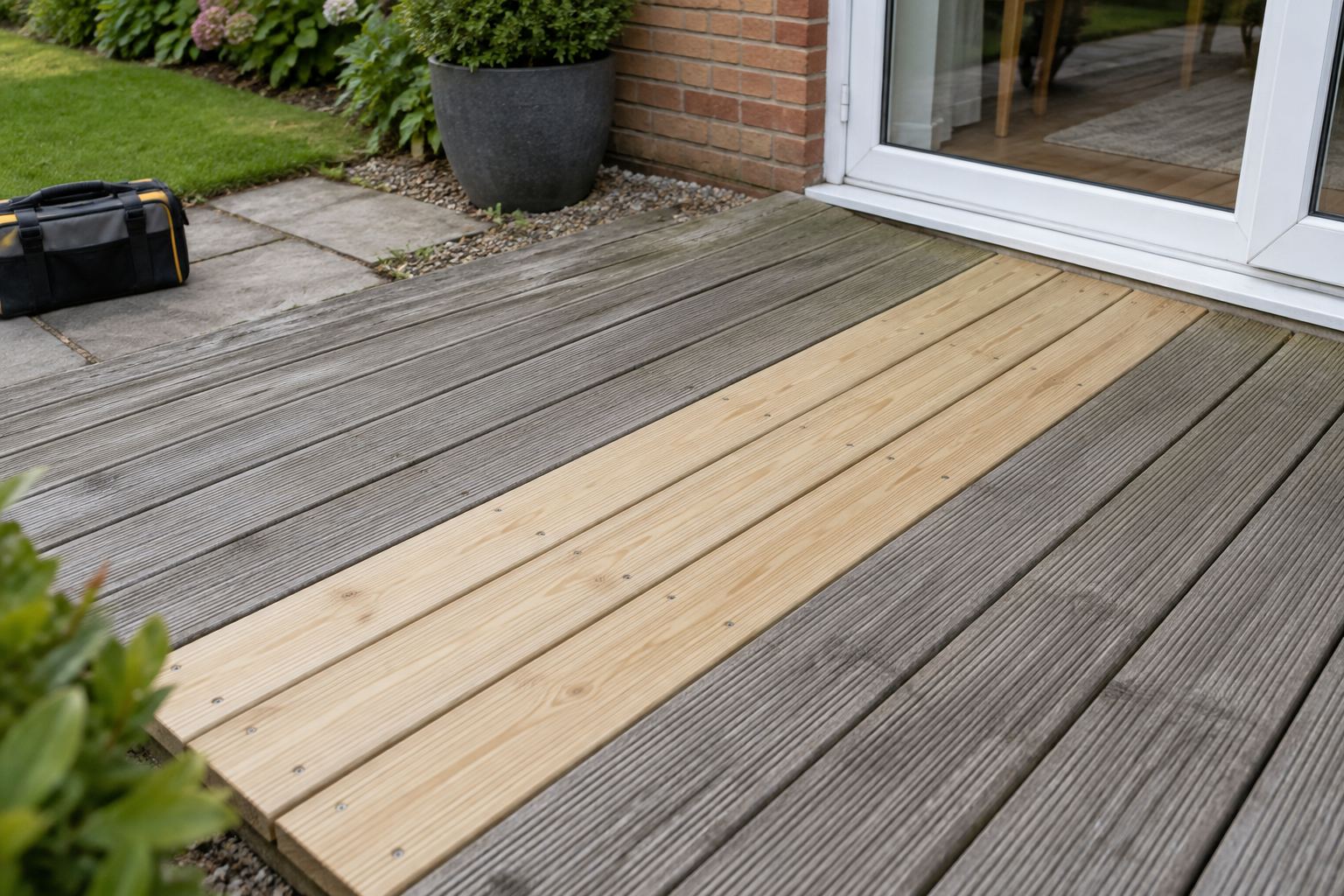
Signs you may need decking repairs
- A small number of boards have split, loosened or become soft.
- A step moves underfoot or its fixings no longer hold.
- A local section dips while the remainder appears firm.
- A handrail or balustrade connection has loosened and needs assessment.
Find the limit of the damage
The end of a board can fail because water sits around a fixing or because the joist below has softened. Replacing only the surface in that situation may leave the same weakness. The contractor should examine the bearing points and adjacent timber, not just match the visible board width.
Adding timber alongside a weak joist, sometimes called sistering, is only appropriate where sound bearing and adequate connections can be achieved. Fixing a new piece onto rotten material is not a structural solution. Widespread decay, movement in main posts or doubtful elevated supports may call for a rebuild or specialist design instead of a local patch.
What to discuss when the contractor visits
Describe the movement or damage without testing the structure with your weight. Photographs from a safe edge are enough for an initial discussion. Mention any earlier repairs and whether the issue appeared after a leak, prolonged damp or a change in use.
The work to include in the proposal
- Identify the fault from safe access and establish whether the deck should be taken out of use.
- Lift the necessary boards and inspect joists, ends and nearby connections.
- Match replacement board dimensions and the fixing method to the retained deck.
- Replace failed timber or make an appropriate designed support repair.
- Secure affected steps or rails and check the finished surface for movement.
- Remove sharp waste and explain any colour difference or future work still needed.
How much to allow for decking repairs
The site’s indicative project range is £150–£1,200. It is a budgeting guide for the described work, not a fixed quote or a promise about prices at your address. The small-job end of the range suits limited boards or fixings with sound supports. Opening up, sourcing a discontinued profile, rebuilding a tread or repairing local joists adds labour. Work on major posts or widespread structural decay needs its own assessment and may exceed a repair budget.
Ask the business to state the scope, any VAT, material delivery and waste charges, and which uncertainties remain. Changes uncovered on site should be discussed before additional work is authorised.
Permissions and the limits of the job
A small like-for-like board repair and an alteration to a raised structure are different proposals. If supports, guarding, height or layout will change, establish the applicable planning and building control requirements before extending the repair.
Timing and looking after the result
Allow roughly 4 hours–2 days for the work described in this service guide. Scheduling, material supply, weather and any necessary drying or approval stages can extend the overall period.
Keep a note of the repaired area and report renewed movement. New wood often looks lighter than weathered boards, and an exact colour match is unlikely. A suitable finish may reduce the contrast after the timber is ready, but it does not strengthen unsound material.
Questions worth asking
Can the whole deck be judged from the repaired patch?
No. A local repair covers an agreed area and does not certify concealed parts of the entire structure. Ask the contractor what was inspected and whether any further assessment is needed.
Will new boards match the old ones exactly?
They may differ in colour, grain or profile, especially if the original product is discontinued. Ask about the closest suitable replacement and whether changing a complete run would give a more practical result.
Should I tighten a loose railing before the contractor visits?
Keep people away from a loose protective barrier and describe the problem to the contractor. A loose fixing may be a symptom of decayed supporting timber, so tightening it alone cannot establish that the railing is safe.
Describe the job you want assessed
Use the free decking quote form to explain your decking repairs project. Depending on the available businesses and your postcode, Garden Decking UK may match the enquiry with up to four independent specialists. You do not have to accept a quotation.
Joining companies are asked for relevant insurance details and references. Check current evidence and comparable work before appointing anyone. The contractor you choose undertakes the work under your agreement with that business; Garden Decking UK provides the introduction and does not employ the installers.