
What is timber decking installation?
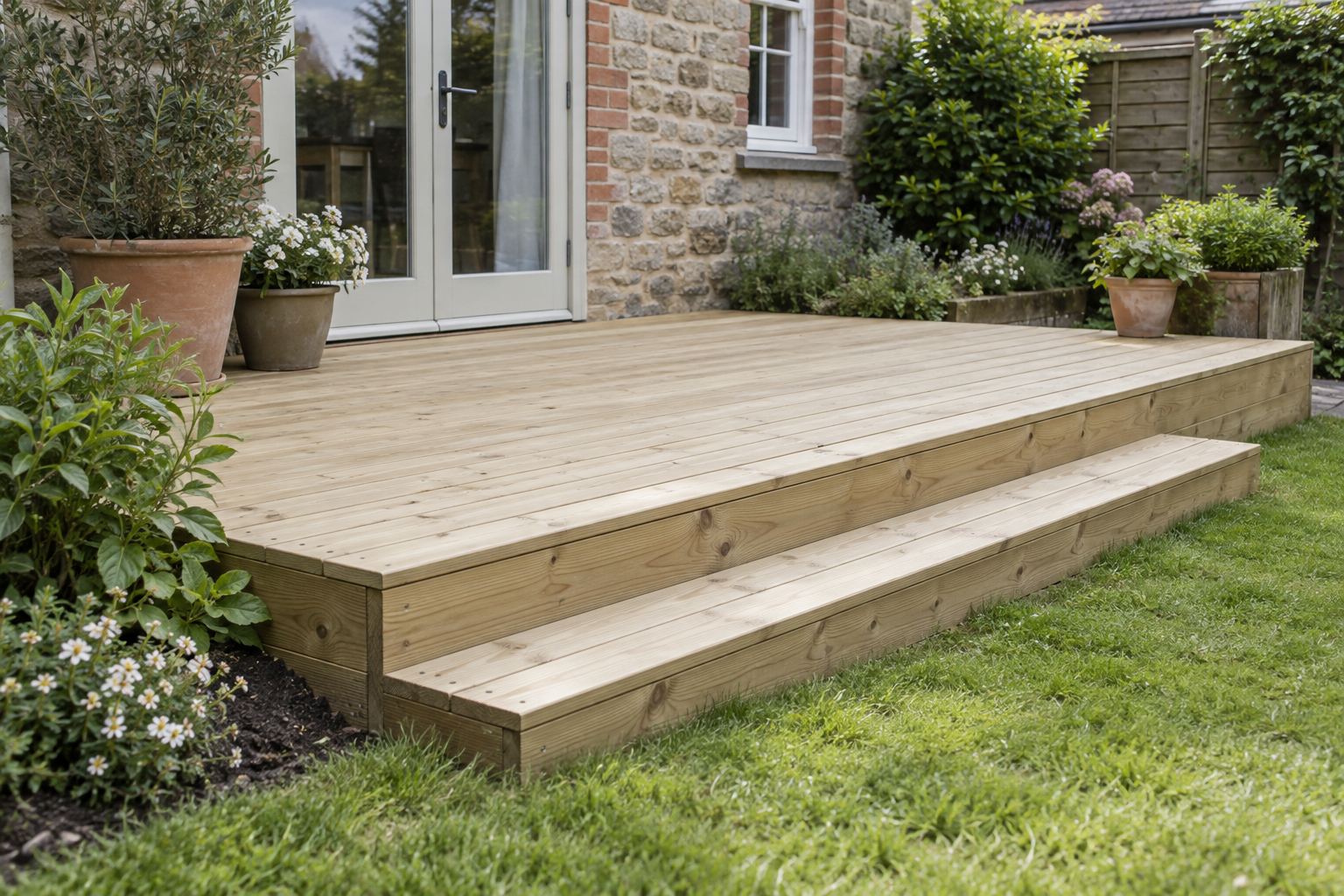
Timber decking installation creates a garden platform from softwood or hardwood boards carried on a separate supporting structure. The appeal is the grain and feel of real wood, but timber selection needs to extend below the surface. Board quality, structural strength, preservative treatment and drying conditions each have a different job to do.
Signs you may need timber decking
- You want natural wood grain beside planting or an older property.
- A new low platform is needed for chairs, a bench or a small dining area.
- You prefer a timber surface that can be refinished when appropriate.
- You need a shape or step arrangement made to suit the garden rather than a standard kit.
Separate board choice from structural timber
Pressure treatment and strength grading describe different qualities. The joists and beams need appropriate structural sizing and durability, while the surface boards need a suitable profile and fixing schedule. Ask for the specification of both. For softwood structural deck supports, the TDCA recommends Use Class 4 treatment even when the timber is above ground.
Hardwood, modified timber and treated softwood have different cutting and fixing needs. Dense boards may require pre-drilling, and the fixings must be compatible with the timber and exposure. Site-cut treated ends need the appropriate preservative treatment. Grooves alone do not make a deck slip-proof; how readily the surface sheds dirt and dries matters too.
See TDCA advice on deck joists for the association’s treatment recommendation.
What to discuss when the contractor visits
Tell the fitter how you want the wood to look as it ages. Some homeowners accept natural weathering; others want to maintain a colour. Discuss furniture positions and the route across the deck so that steps and changes in level do not land in awkward places.
The work to include in the proposal
- Check the ground, board direction and the finished height against doors and wall vents.
- Specify the support arrangement and the strength and treatment of structural timbers.
- Prepare the ground and use weed control where suitable without trapping water.
- Set out the frame, protect relevant cut ends and leave ventilation beneath it.
- Lay the boards with suitable gaps and timber-compatible fixings.
- Complete steps and fascias, clear sharp offcuts and agree when finishing can take place.
How much to allow for timber decking
The site’s indicative project range is £1,500–£4,500. It is a budgeting guide for the described work, not a fixed quote or a promise about prices at your address. Softwood can suit a modest starting budget. Premium hardwood, shaped edges, complicated stairs or a larger footprint can move the project beyond the usual range. Check whether the first oil or stain coat is included, especially if the timber will need to dry before it can be applied.
Ask the business to state the scope, any VAT, material delivery and waste charges, and which uncertainties remain. Changes uncovered on site should be discussed before additional work is authorised.
Permissions and the limits of the job
Do not assume a deck is exempt just because it is made of wood or composite. Read the Planning Portal guidance for decking in England and check the rules for the actual address. Height, footprint, position and property restrictions all matter; UK nations have different regimes.
For decks requiring planning permission in England, Planning Portal building regulations advice says building regulations should be assumed to apply. Confirm the design and inspection requirements with building control, particularly for elevated structures.
Timing and looking after the result
Allow roughly 2–4 days for the work described in this service guide. Scheduling, material supply, weather and any necessary drying or approval stages can extend the overall period.
Keep leaf piles and soil-filled pots from holding damp against the boards. Inspect fixings and steps during cleaning, and renew the chosen finish according to its instructions and the surface condition. Do not apply a coating to timber that is too wet for that product.
Questions worth asking
Does pressure-treated mean the timber is strong enough?
No. Treatment concerns resistance to biological deterioration; structural strength and the required sizes must also be specified. Ask the installer to identify the structural grade and the treatment class for the supports.
Can I stain the deck as soon as it is built?
That depends on the timber moisture and the finish instructions. Freshly supplied timber may need time to dry. Agree whether a later coating visit is included rather than applying a product before the wood is ready.
Do grooved timber boards prevent slipping?
Grooves do not guarantee grip. Dirt and algae can accumulate on either smooth or grooved surfaces. Suitable board selection, drainage and regular cleaning are needed whichever profile you choose.
Describe the job you want assessed
Use the free decking quote form to explain your timber decking project. Depending on the available businesses and your postcode, Garden Decking UK may match the enquiry with up to four independent specialists. You do not have to accept a quotation.
Joining companies are asked for relevant insurance details and references. Check current evidence and comparable work before appointing anyone. The contractor you choose undertakes the work under your agreement with that business; Garden Decking UK provides the introduction and does not employ the installers.